Fixed grids: 1x1 to 4x4
Grids suit working sets where every agent deserves equal space.2x2 is the
sweet spot for four agents on a laptop screen; 3x3 and 4x4 scale to big
monitors and larger fleets. 1x1 gives one agent the whole surface — useful
for a session you are actively pairing with.
Linear: agents in one row
linear packs every cell into a single row — three side-by-side reviewers,
a pipeline of build/test/docs agents, or any lane you read left to right:
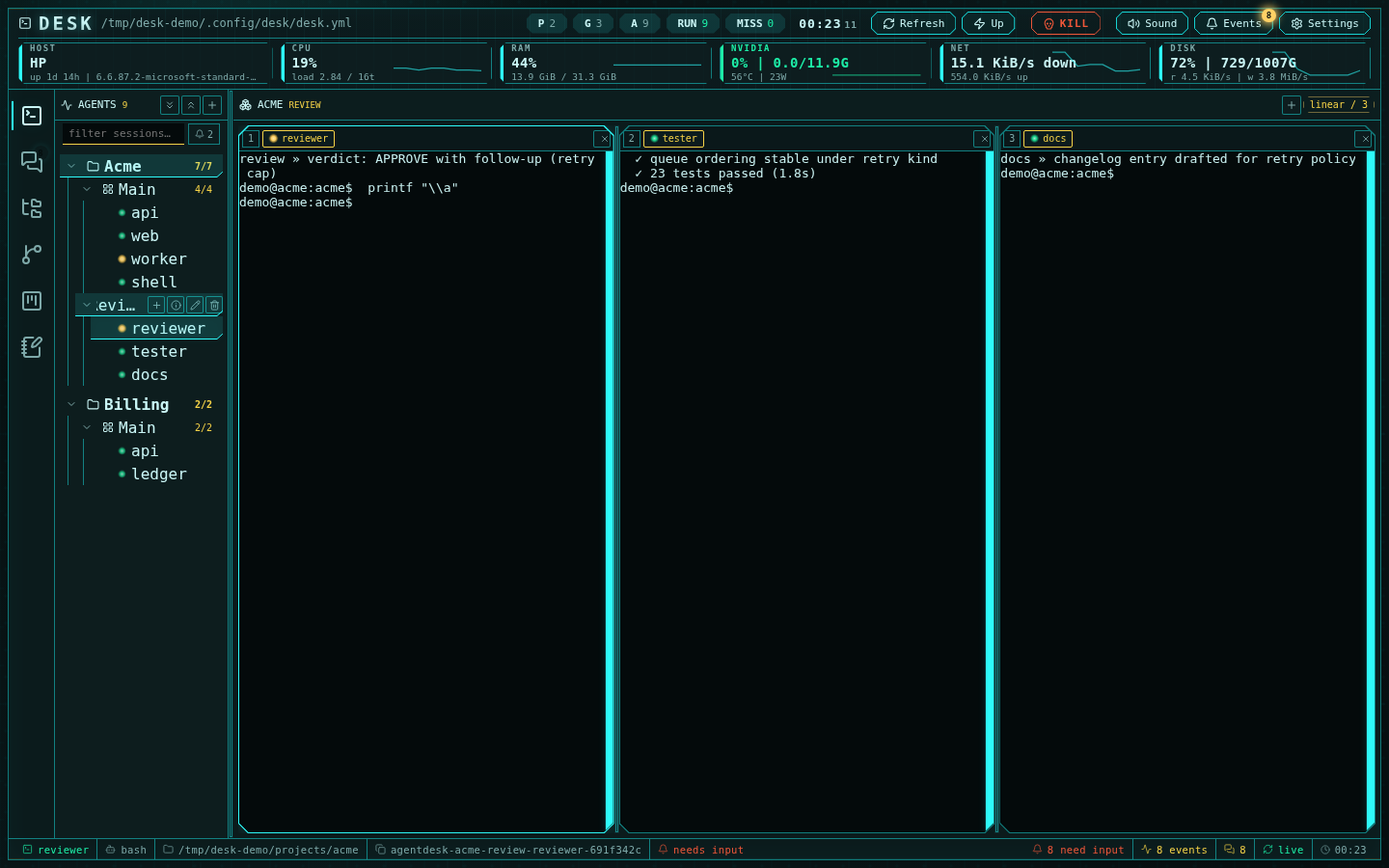
A linear 3-cell review lane: reviewer, tester, docs — with attention lamps in the sidebar
Custom: exact cell counts
custom takes any cell count from 1 to 16 and packs them into a near-square
grid. Use it when the fixed kinds waste space — five agents, seven agents —
or grow it live with the + cell button.
Tuning a layout live
- Switch kinds in place — the layout badge in the multiplexer header is a dropdown; changing it never restarts sessions.
- Resize the splits — drag the separators between cells. The proportions persist per group and restore exactly after a reload.
- Assign sessions to cells — drag a session tab onto a cell, or tap an empty cell to pick a session from an inline picker. Assignments stick.
- Remove a cell — the ✕ on the cell tab strip; orphaned sessions fall back to the first cell rather than disappearing.
Group switching is free
Recently visited groups stay mounted with live cells under a warm budget (about 40 sessions on desktop), so flipping between yourmain grid and a
review lane opens no new connections and repaints instantly. Transcript and terminal
state, scroll position, and selection survive the round trip.
On phones: the pager
Below 860 px each cell takes the whole screen and you swipe between them. The pager diamonds are state-tinted — the active cell expands into a named pill, and a pulsing diamond means that agent needs input, so triage works from the pager alone: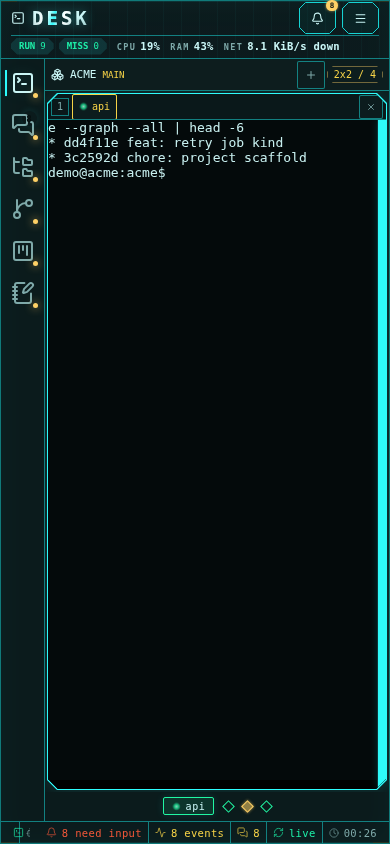
The mobile pager: one cell per screen, state-tinted diamonds, compact fleet strip
Choosing by scenario
Next: put the group in a channel so the
agents coordinate with each other instead of through you.